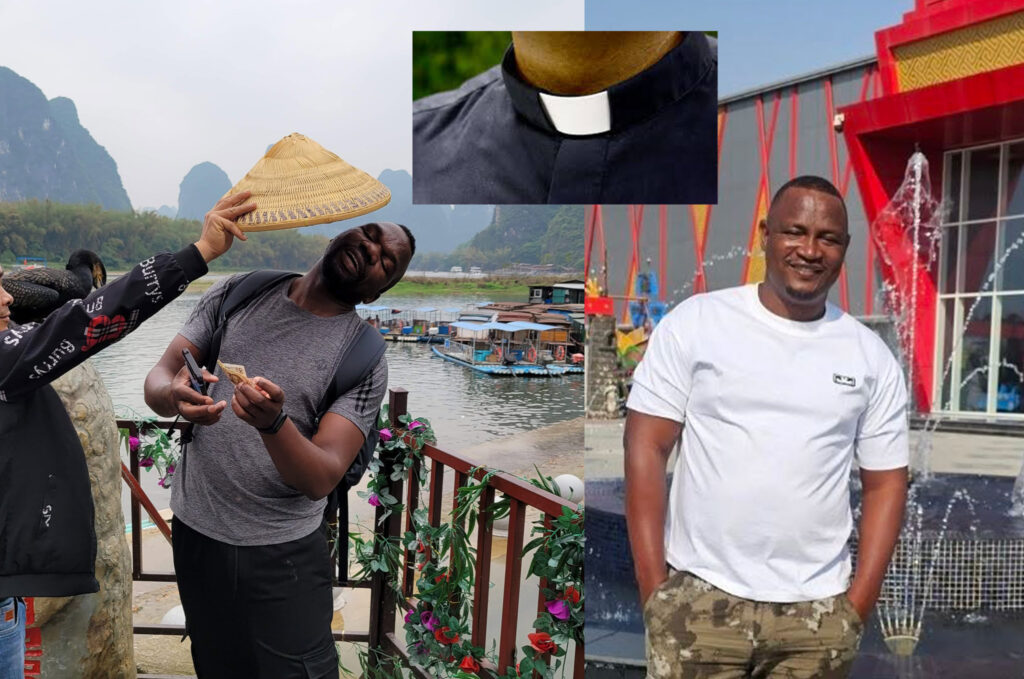
Church or Business? Morton Bhagaya and Ibrahim Swed Trigger Heated Online Discussion
Published on June 26, 2026 at 10:54 AM by Evance Kapito
Malawian social media commentator and online personality Morton Bhagaya has sparked widespread debate after criticising the structure of the Church of Central Africa Presbyterian (C.C.A.P), accusing some of its synods of prioritising regional expansion and financial interests over Christian unity.
Bhagaya, who is based in China, made the remarks in a Facebook post in which he questioned why the church’s synods continue to establish congregations in regions traditionally served by other CCAP synods.
Referring to the CCAP Livingstonia Synod and the CCAP Nkhoma Synod, Bhagaya argued that although Christians worship the same Jesus under one church, the existence and expansion of separate synods in different regions raises questions about unity.
He went on to accuse church leaders of being more interested in collecting offerings than promoting Christian values, questioning whether institutions he believes compete with one another can effectively teach love, morality and unity.
The post quickly gained traction on social media, drawing mixed reactions from Malawians. While some agreed with Bhagaya’s views and questioned the structure of the church, others criticised his comments as unfair and disrespectful to one of the country’s largest Christian denominations.
The debate intensified after Malawian businessman and public figure Ibrahim Swed shared Bhagaya’s post and expressed his own opinion.
In his response, Swed claimed that churches have become businesses, arguing that every church operates like a privately owned enterprise where offerings are the primary source of income.
He further alleged that pastors have become salespeople and that many are opening their own churches to “sell salvation,” remarks that generated even more discussion online.
The comments have since divided opinion, with some social media users supporting the criticism and calling for greater accountability within religious institutions, while others defended churches, saying they continue to play an important role in promoting faith, morality and community development.
As the debate continues to trend online, neither the Church of Central Africa Presbyterian nor the synods mentioned had publicly responded to the statements at the time of publication.